Sunday, August 25, 2013

Manjolai incident retold by Nellai author


By N Vinoth Kumar

Published: 08th May 2013

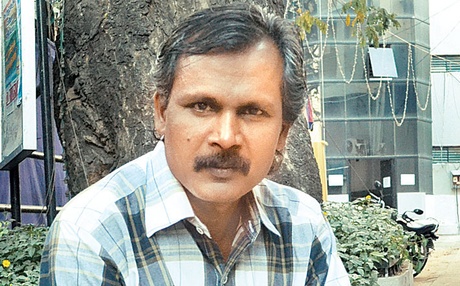
The infamous Manjolai incident, in which 17 persons succumbed in police brutality on July 23, 1999, has been brought out as an autobiographical short story.

The incident happened during a procession in support of the Manjolai estate labourers’ struggle for wages on the banks of Thamirabarani in Tirunelveli. The story is one among the 21 short stories penned by Mari Selvaraj, which has been brought out as a collection, Thamirabharaniyil Kollappadaathavargal, by Vamsi Books.

Probably, Mari Selvaraj is the first writer from Tirunelveli to document the incident through a short story and his short story collection has gained momentum in literary circles now.


Born in Puliyankulam of Thoothukudi district, Mari Selvaraj is the fifth son to his parents, who are agricultural labourers. “The freedom that poverty offered me has given me rich experiences and I have many stories to share,” says the author.

Speaking to City Express, Selvaraj shares about  his journey as a writer to an assistant director in Kollywood. “My entire schooling was in my village. It was when I stepped into the law college, I first came to a town. But college life was not a good experience. The first question I faced was about my caste. Since I was considered as an insubordinate student, whatever I did went wrong. At one point of time, a police case was registered against me and that was when I discontinued my studies and ran away from home,” says Selvaraj.

Selvaraj came to Chennai with Rs 1400 and took up jobs in places like petrol bunks while simultaneously searching for a better job.

“My search ended when I joined as an office boy in the office of film director Ram,” he says.

Ram was making Katradhu Thamizh then, which had actor Jiiva in the lead role. “The film developed my interest in cinema. After the film, Ram had a break for three years. That’s when we came close by getting to know each other well. Ram gave me books and films, and guided me well. He also started a blog named Kaatchi for me so that I could convey my thoughts through writing. The stories of Thamirabharaniyil Kollappadaathavargal were first published in this blog. Later, I became an assistant director to Ram and it’s been seven years of my association with him.”

The stories in this collection travel in diverse platforms and are mostly about either politics or relationships.

“Party leaders see politics as business. Mine was ‘frustrated politics’ because whatever I lost in it during my early life have not been compensated till now. Tamil Nadu is in a state of ‘sexual poverty’. Having a woman’s friendship is considered a fantasy. At this juncture, understanding either sex becomes critical. I think my stories reflect that criticality.”

Inspired by writers G Nagarajan and Saadat Hasan Manto, Selvaraj wants to direct a film as well.

“Though I keep writing, my ultimate aim is to direct a film which brings reputation to whatever I learnt from Ram. I believe that will be the true respect to my mentor,” he concludes.

Courtesy: The New Indian Express

Tuesday, August 13, 2013

‘Pottekkatt was a born writer’

N Vinoth Kumar

Published Date: Apr 8, 2013

As the birth centenary celebrations of famous Malayalam writer S K Pottekkatt take off, City Express catches up with translator Su Ra, who made most of his works available to Tamil readers.

When the literary world is celebrating the 100th birth anniversary of famous Malayalam writer S K Pottekkatt, it should be remembered that most of his works have been translated into Tamil and the credit for that goes to translator Su Ra. These books have a large readership in the State and have even been mistaken by many to be the writer’s own work in Tamil.

Sankaran Kutty Pottekkatt, born in Kerala on March 14, 1913, made his entry into the literary world through short stories and poems. He has written 10 novels, 24 collections of short stories, three collections of poems, 18 travelogues, four plays and a couple of essay collections. His novels Oru Theruvinte Katha (The story of a street) and Oru Desathinte Katha (The story of a locale) fetched him the Kerala Sahitya Akademi Award and Jnanpith Award respectively. It should be noted that his home town, Kozhikode, is the focus in both the novels.


Many of his stories revolve around love and most of his characters are wrought by fate. His narrations have descriptions of nature without any decorative words and many of his stories reflect magical realism. He made the writing of travelogues a literature form.

Subbiah Rajasekar, popularly known as Su Ra, is a noted translator who has translated about 50 of Pottekkatt’s books into Tamil. These include popular novels such as Naadan Premam as Gramathu Kaadhal, Vallikadevi as eponymous title and Prema Shiksha as Oru Kaadhal Kathai. Born in Munnar, he developed an interest to Malayalam literature through the Tamil translation of works such as Paathummaayude Aadu and Baalyakaala Sakhi, both penned by Vaikom Muhammad Basheer. That led him to learn Malayam in order to read Malayalam literature directly.


In 2002 he started translating world literature into Tamil and published it in Iniya Udhayam, a monthly magazine entirely dedicated to publishing translated works. The contribution of Iniya Udhayam to the world of translated literature is very significant and it is the only monthly magazine in Tamil Nadu of its kind. Till date, Su Ra has translated over 115 works of world literature into Tamil through that magazine.

Speaking to City Express, Su Ra reminisces about his efforts to translate Malayalam literature into Tamil.

“My debut translation was Basheer’s Mathilukal and it got published in Manjari magazine. Publishing the translation of a whole novel in a magazine surprised many back then, but Basheer’s novels were of only 50 to 60 pages. Later the style came to be known as the Basheerian type of novel in Malayalam literature. Till 2000 the Tamil publishing industry was a little hesitant to publish translated literatures. It was Pudhumaippithan Pathippagam, later renamed Sandhiya Pathippagam that brought out my translation work for the first time in book form. Now most Tamil publishers are bringing out many translated works, not just from Malayalam but from other languages as well,” he said.

Asked about his views on the writings of Pottekkatt, he said, “There is a statue of Pottekkatt on S M Street in Kozhikode and this is enough for us to know his literary elegance. He made travelling monologue into travelling literature. Till date, no one has defeated him in that particular genre. He is a dictionary for young Malayalam writers. His sense of characterization, his development of a plot and his undecorated narration are unique. He does not look for happenings separately to write a story. He brought his own experiences to both his fiction and travelogue work. There are no messages in his story. Rather, the message lies in the form of narration. To put it simply, Pottekkatt was a born writer,” Su Ra concluded.


Courtesy: The New Indian Express

Pottekkatt image courtesy: Wikipedia

Monday, August 5, 2013

‘Resolving conflicts is a matter of constant practice’

N Vinoth Kumar

Published Date: Jan 9, 2013

There are two exercises which a person must have every day — swimming and facing conflict. As the whole world is surrounded with water, one really should know how to swim and in a life filled with quarrels and disputes, one should know to manage conflict, says Dr S P Udayakumar — the man behind organising and leading the stir against the Koodankulam Nuclear Power Project — in his new book.

An ardent anti-nuke activist, he wrote quite a few books on the topic, such as Anu Aattam, Thagaraaru and Asura Sindhanaigal, a compilation of thoughts of Asuran, the renowned environmentalist. Udayakumar, who is known for his writing skills both in Tamil and English has now penned Puyalukku Pinney Poonthendral, published by Kalachuvadu publications. It was released a week ago in Koodankulam and will be available at the Chennai Book Fair this year.


In his new book, Udayakumar talks about his past when he worked as a teacher in Ethiopia, where he summed up the courage to deal with conflict.

“I started to write this book in 2008 as a series when we started a magazine, Puthiya Thendral. But after the sudden demise of our friend Asuran, the magazine was closed and thereby the series was also stopped. Later, in 2011, when I was working in Monmouth University, USA, I had a chance to complete the book” says Udayakumar in his preface to the book.

The ‘Iron Man’ also attributes his skill of dealing with issues to his parents. His father was a politician and his mother, a social worker, met many people, who were having personal, official and societal problems. He explains, “My parents’ way of counseling people and their urge to bring a ‘win-win’ solution to the problems attracted me and I imbibed that skill with some practice.”

When he applied this practice to his friends and it worked on them, he began to believe that violence could never offer a solution to one’s problems.  To teach his doctrine, he set up a ‘UNESCO Club’ in the school he worked, even though it was controlled by a communist military government.

“A panacea for fear for others is nothing but understanding and having kindness for them. If we are fearful, we will not be capable of managing conflicts,” writes Udayakumar in one portion of this book. “If self-analysis is negative, we lose the confidence to engage our conflict,” he adds.

Throughout his book he stresses on the importance of ‘listening,’ apart from encouraging everyone to have peace, education and practice conflict management.

“Listen to the worries of individuals and that will be a great help in those moments, for people entangled in the problem,” he says.

In this book, he listens to the problems of people whom he considers ‘affected’ – between lovers, between an authoritative soldier, his superior and himself, district education officer on setting up of ‘UNESCO Club’ in the school and celebrating the Independence Day of USA, and also between brothers.

While sharing his past he also tries to depict the history of Ethiopia at that times — militarism, red terror, white terror and Mengistu tyranny —  have made him believe the principle of ‘servant leadership’  and all this helped him while leading the  anti-KKNPP struggle.

Through this work, his six years of Ethiopian life, that constructed a man of new beliefs, principles and his own way of struggle, Udayakumar makes genuine efforts to win the hearts of the readers. The book is legitimate and compassionate and makes for an engaging read.

Courtesy: The New Indian Express
Monday, July 29, 2013

Sufferings in the deserts

Author: N Vinoth Kumar | ENS
Published Date: Feb 19, 2013 

Malayalam writer Benyamin tells City Express what prompted him to write the award-winning novel Aadujeevitham

We hear only the success stories of Malayalees in the Gulf, but I wanted to highlight their sufferings in those desert regions through my writings, says writer Benyamin. When his Aadujeevitham, a novel based on the real torturous life of a Malayalee, who was a shepherd in one of the Arabian sheepfold in the Gulf got published, it became a new revelation in Malayalam literature. Probably, it was the first work in Malayalam that entered the longlist of Man Asian Literary Prize among 14 other works from Asia.

Benyamin, the author of Aadujeevitham, now considered one of the finest litterateurs of Malayalam, explores the lives in and landscapes of desert countries like the Middle East and Gulf. A native of Pandalam, Kerala, Benyamin, whose real name is Benny Daniels, is working as a project coordinator in one of the electro-mechanical companies in Bahrain. He recently visited Chennai to participate in a literary festival.


“I left for Bahrain in 1992 for a job at the age of 21. In those eight years of bachelor life, I didn’t have any other work other than my regular job. After a while, I developed an urge to read Malayalam classics and new forms of literary works. Then I thought of writing since I had something new to tell the world and the result was some of my writings were published in Malayalam weeklies. In 2000, my debut collection of short stories Euthanasia, got published,” he says.

The collection fetched him Abudhabi Malayali Samajam Award. Till date, he has three short story collections, two non-fictions and five novels to his credit. In 2009, he was presented with the Kerala Sahitya Akademi Award for his novel Aadujeevitham. The book has also been translated into Tamil, Hindi and recently in English as Goat Days.

Aadujeevitham depicts the story of Najib, a Malayali who travels to the Gulf in search of job and is picked by an Arabian sheepfold owner. Najib turns a slave there and becomes a shepherd, who spends life with goats. With the help of his other slave friends in other Masaras (Arabic word for sheepfold), he tries to escape in the desert.


Each and every line of the novel had a poetical touch while narrating the incidents, though he is not confident with writing poems.

“It is truly a biographical sketch with some elements of fiction. The protagonist in the novel named Najib is a real name and a real character who lived in my village. One day my friend asked me to meet him. Najib reminisced his past and I decided to pen it down,” says Benyamin.

He added, “Before I get into writing, I did lot of studies about Malayalees sufferings in the Gulf through news articles published in newspapers and magazines.”

The English translation brought him in the place of Man Asian Literary Prize longlist last year. “There were around 15 writers and I was one among them. It was the first time, I think, a regional work got bigger attention. I was happy to be in the longlist along with great other writers like Orhan Pamuk and Hiromi Kawakami,” he adds.

So, will he tell only stories from the deserts? “I try to explore new stories of different places. But there are many stories from deserts that are yet to be told. Even if I tell the Middle-East stories, I will not follow any particular style of narration,” he says.

At a time when he is considered one of the best writers in Malayalam, City Express asked him about the present scenario of Malayalam literature and he responds, “Yes, it is far well now. Many new set of writers, most of them young, grab the readers’ attention through their works. Malayalees too came out of the habit of watching TV always. Gradually, they are becoming voracious readers and at times, writers.”

“Something haunts inside me and I want to share that with my world and so I am writing. You have to be very honest in writing because the readers have good knowledge about the subject and the story you are telling. It should not be available on the Internet or shown on TV. It is the challenge the new writers are to face,” says Benyamin.

Courtesy: The New Indian Express
Benyamin Photo Courtesy: The Hindu


Tuesday, July 23, 2013

‘Dalit writing inevitable’


Dalit writing in Tamil literary milieu is an inevitable historical need, said well-known writer Azhagiya Periyavan.
He was in the city to receive the Periyar Award conferred by Dravidar Kazhagam, recently.
There was a time in Tamil literature when it was filled with conventional style of writing. In mid-90s, writers from Dalit background grabbed the attention of the readers and Azhagiya Periyavan was one among them. His aesthetic way of writing keeps Azhagiya Periyavan an odd man out of other Dalit writers.
“Critics say that it is both my strength and weakness,” he said.
A native of Pernampet in Vellore district, Azhagiya Periyavan, whose real name is Aravindan, is working as a teacher in a tribal school.
He talks about how he overcame his inferiority complex being a differently-abled and started voicing his views for Dalits.
“I was brought up at my mother’s house near my village. As I am partly disabled, I used to feel very inferior and stayed away from other children. Books were my only pass time then. I used to read around 200 to 300 books in a month,” he says.
He said, “After reading a lot, I was inspired to write. There were many others who had their names as Aravindan and when I searched for a pseudonym to avoid confusion, I found the name Azhagiya Periyavan in one of the books.”
His first novel Theettu appeared in a small journal Kanaiyaazhi was received well by the readers. His short story collections Thisai Ettum Suvargal Konda Gramam, poetry collections Arooba Nanju, Unakkum Enakkumaana Sol,  essay collections  Meelkonam, Kambalippoochi Iravu and a novel Thagappan Kodi, received accolades from both the readers and critics. He received the State Award for best novel in 2003.
One of his short story Kuradu, which was later made into a short film Nadandha Kathai, fetched an award in the Best Indian Short Film category at the International Short Film Festival. All of his works had an internal objective – to voice for Dalits.
“After my college days, I worked in an NGO for a while. At that time, we rescued more than 100 children who worked as bonded labours in beedi-rolling factories and tanneries. They were tied up with chains and made to work for more than 16 hours. And all those children were Dalits. From then on, I wrote to raise my voice for them. Writing for Dalits  is a historical need,” he added.
So, what is his view on Periyar’s thoughts and ideologies? “Periyar’s ideologies have relevance even today. But he is still portrayed as a man who opposed religion. Re-reading and reviving his ideologies are necessary,” he said.
Courtesy: The New Indian Express

Monday, July 22, 2013

Love knows no caste

Author: N Vinoth Kumar | ENS
Published Date: May 30, 2013 9:22 AM

Writer Imayam’s book Pethavan throws light on the ruthless ‘honour killings’ carried out by khap panchayats to oppose inter-caste marriages in Tamil Nadu

Of late, the word ‘love’ is turning out to be an unpleasant one with a section of society and is being perceived as the root cause of all pain. Worse, those falling in love are treated as ‘criminals’.

Members of a politicial party who have been persistent in their demand to have an anti-Cupid crusade in society are to take a part of the blame. While the intellectual community is taking efforts to end the ‘castecentred anti-cupid crusade’ at the ground level, there are some contributions being made in the literary arena too. A short story has now succeeded in creating tough opposing waves against this crusade.

Writer Imayam, a well-noted litterateur in the Tamil literary circle, has penned a short story titled Pethavan last year, which got published in a well-known literary magazine Uyirmai in its September 2012 issue. Widening its reach with each passing day, this 26-page short-story (also called Nedunkathai in Tamil) collection, which has been compiled into a single book, has sold over 18,000 copies till date. At a marriage function in Thiruvarur, around 1,200 copies of Imayam’s book were distributed free of cost to the invitees. It is now being translated in Malayalam and Kannada.
In his story, Pethavan narrates the collapse of a poor Hindu family after a girl in the family gets involved in a love affair with a lower caste boy. The girl, Bakkiyam, also the lead character in the story, falls in love with Periyasamy, a Dalit boy, while at college. When their relationship comes to light, the upper caste families in the village oppose the relationship.

The couple attempt to elope from the village twice and both times, the villagers manage to stop them and brutally punish them by beating them up in public view. When the girl gets caught the third time while trying to elope with the guy, the villagers pass orders for a ‘honour killing’. The panchayat assigns this task to the girl’s father Palani himself. They also warn that if the girl is not killed, she will be raped and murdered by the villagers. To avoid such a horror, Palani, who was also ashamed by her act, agrees to kill his daughter.

However, paying heed to the fervent appeal from Bakkiyam’s grandmother, mother and differently-abled sister, Palani decides to go against the panchayat’s decision and plans to save her daughter instead. The night when the killing is scheduled, Bakkiyam’s father helps her to escape from the village with Periyasamy. With their successful escape and with Palani ending his own life after making sure of his daughter’s safety, the story comes to an end.

Throughout the story, Imayam brings out precedencies of honour killings, quoting examples of the Kannagi Murugesan pair, who were killed a decade ago for the same ‘ inter-caste marriage’.

The unnamed political party plays a vital role in this story and instigates the villagers to engage in honour killing. Interestingly, the story was published after a political party leader’s alleged instigating speech on inter-caste marriage in April at Mamallapuram.

Interestingly, it was after this story was published that there was caste violence in Dharmapuri over a love affair.

“It is a pure co-incidence” said Imayam, relating the story to the party’s anti-cupid crusade. “We say that ours is an educated culture. But with such opposition to love, we have to think twice before terming it an educated one.”

“Tamil culture has always praised love affairs. But, our society today is caste-centric and not Tamil culture-centric. It is to be kept in mind that your daughter has every right to choose her partner. When you, as a parent, become a hindrance, it means you are violating her basic fundamental right. The demeanour activities of some parties are not just aimed at opposing love, but has also been used as a tool to build up a casteist society” he added. “It has been said that they oppose love affairs happening between high caste and low caste people.

But, will they be ready to accept a poor boy if he loves a rich girl from the same caste? Moreover, in general, it is seen that society accepts a relationship between an upper caste boy and a lower caste girl, opposes the relationship when it is between a lower caste boy and an upper caste girl,” Imayam said.

“When one reads this story and gets a bitter feel about the whole caste structure in society, only then I think the story can be said to have attained success,” he concluded.


Courtesy: The New Indian Express

அங்கிள் பாய்!

ந.வினோத் குமார்
‘ஒரு ஊர்ல ஒரு ராஜா இருந்தாராம்...’, ‘அது ஒரு பயங்கரமான காடு.அந்தக் காட்டுல ஒரு சிங்கம்...’, ‘வடக்கில இருக்குற ஒரு மலையிலதான் அந்த ராட்சசன் வாழ்ந்துட்டு வந்தானாம்...’

இப்படி கதைகள் கேட்க யாருக்குத்தான் பிடிக்காது?அதுவும் குழந்தைகளுக்கு? சிறுவயதுகளில் பாட்டி சொன்ன மந்திரக் கதைகள், அரையாண்டுத் தேர்வுகள் முடிந்த விடுமுறை காலத்திற்குச் சென்ற சித்தி வீட்டில் கேட்ட சாகசக் கதைகள், நீதிபோதனை வகுப்புகளில் கேட்ட ஆன்மிகக் கதைகள், சற்றே பெரியவன்/ள் ஆனவுடன் எழுத்துக்கூட்டிப் படித்த ‘சிறுவர்மலர்’, ‘தங்கமலர்’ கதைகள், நண்பர்கள் வீட்டிலிருந்து கொண்டு வந்து படித்த பஞ்சதந்திரக் கதைகள், ஐந்தாம் வகுப்பு நெருங்கிய வயதில் படிக்க ஆரம்பித்த ராணி காமிக்ஸ் கதைகள், ஏழாம் வகுப்பு சுதந்திர தின விழா பேச்சுப் போட்டியில் கிடைத்த ‘ஆயிரத்தோரு அரேபிய இரவுக் கதைகள்’... என பதினைந்து வயது நிறைவதற்குள் நாம் கடந்து வருகிற கதைகளின் வகைகள்தான் எத்தனை, எத்தனை?

குழந்தைமைத்தனத்தைத் தாண்டி நாம் பெரியவர்களான போது சிறுகதைகள், ஒரு பக்கச் சிறுகதைகள், சற்றே பெரிய சிறுகதைகள், ஒரு வரிக் கதைகள், அரை பக்கக் கதைகள், ஏடாகூடக் கதைகள், அனுபவக் கதைகள் என நாம் எத்தனை கதைகள் படிக்க நேர்ந்தாலும்,சிறுவயதில் காமிக்ஸில் படித்த இரும்புக் கை மாயாவியின் ‘தங்க வேட்டை’யும், தீரர் தில்லானின் ‘கௌபாய்’ கதைகளும் நம்மை வசீகரித்ததற்கு ஈடாகுமா?

மாயாவி,லேடி ஜேம்ஸ்பாண்ட் மாடஸ்தி,கரும்புலி,கழுகு மனிதன்,தீரர் தில்லான், டார்ஜான் என நம் அரைடிராயர் காலங்களில் நமக்கான கற்பனை உலகில் சீறிப் பாய்ந்து வந்த சாகசக் கதாபாத்திரங்கள்தான் எத்தனை, எத்தனை? காமிக்ஸ் புத்தகங்களைப் படித்துவிட்டு, அதே கதையை நண்பர்களுடன் சேர்ந்து விளையாடிய பொழுதுகளை நீங்கள் இன்றும் நினைவில் வைத்திருந்தால்... நம்மிடம் இன்னும் கொஞ்சம் குழந்தைத் தன்மை ஒட்டியிருக்கிறது என்று உற்சாகப்பட்டுக் கொள்ளலாம்!

என்னைப் பொறுத்த வரையில் ஒரு சீரான வாசிப்புக்கு அடித்தளமாக அமைபவை காமிக்ஸ் புத்தகங்கள்தான் என்பேன்.ஆரம்ப காலங்களில் சிறுவர்மலர், தங்கமலர்... சற்று வளர்ந்த பிறகு காமிக்ஸ் புத்தகங்கள்... அதற்குப் பிறகு வார இதழ்கள்... அதற்குப் பிறகு ராஜேஷ்குமார்,பாலகுமாரன் ஆகியோரின் பாக்கெட் நாவல்கள்... அதன் பிறகு தீவிர இலக்கிய வாசிப்புகள்... அதன் பிறகு நமது சுய தேடல்களில் நாம் வாசிக்கிற புத்தகங்கள்... அதன் பிறகு ஆங்கிலப் புத்தக மோகம்... இப்படித்தான் ஒருவரின் வாசிப்பு வளர்கிறது என்பது என் எண்ணம். எனினும், ஒருவர் தன் பத்து வயதில் நோம் சாம்ஸ்கியைப் படித்தால் அதில் தவறில்லை...  They are born prodigies even though they are protege(e)!

ஆக, ஒரு பரந்த வாசிப்புப் பழக்கத்திற்கு அடிப்படையாக காமிக்ஸ் புத்தகங்கள் அமைந்திருக்கின்றன என்கிற போது,அவற்றின் முக்கியத்துவத்தை நாம் உணர்ந்துகொள்ள வேண்டும்.இருபது ஆண்டுகளுக்கு முன்பு ராணி காமிக்ஸ், முத்து காமிக்ஸ், லயன் காமிக்ஸ் எனப் பல காமிக்ஸ்கள் வந்துகொண்டிருந்தன.இன்று அவற்றை எல்லாம் தேட வேண்டி இருக்கிறது.

ஆனால் 1970&ல் அறிமுகப்படுத்தப்பட்ட ‘அமர் சித்ர கதா’ எனும் காமிக்ஸ் புத்தகம்... (அதை காமிக்ஸ் என்று சொல்வதை விட சித்திரக் கதைப் புத்தகங்கள் என்று சொல்வது சரியாக இருக்கும். எனினும், பழக்கமான வார்த்தை என்பதால் ‘காமிக்ஸ்’ எனும் வார்த்தையே பயன்பாட்டிற்கு எடுத்துக்கொள்ளப்படுகிறது!) இன்று வரை சுமார் 450 தலைப்புகளுக்கு மேல் வந்திருக்கிறது.நாட்டுப்புறக் கதைகள்,புராணக் கதைகள், வேடிக்கைக் கதைகள்,சாகசக் கதைகள் என பல்வேறு பிரிவுகளின் கீழ் புத்தகங்கள் வந்திருக்கின்றன.ஒவ்வொரு வருடமும் பல்லாயிரக்கணக்கான பிரதிகள் விற்றுத் தீர்ந்து கொண்டே இருக்கின்றன.சுமார் பத்து பதிப்புகள் வரை கண்ட புத்தகங்கள் இருக்கின்றன.

இத்தனை சாதனைகளுக்கும் என்ன காரணம் என்று நீங்கள் கேட்டால் அதற்கு ‘டக்’கென்று பதில்சொல்லலாம்... ‘ஆனந்த் பாய்!’

‘அங்கிள் பாய்’ என்றுதான் குழந்தைகள் செல்லமாக அழைப்பார்கள்.அவர் இறந்து ஒரு வருடம் ஆகிறது.அவரின் நினைவைப் போற்றும் வகையில் ‘அமர் சித்ர கதா’ நிறுவனமே ‘ஆனந்த் பாய் & மாஸ்டர் ஸ்டோரிடெல்லர்’என்கிற தலைப்பில் அழகிய படங்களுடன் கூடிய காமிக்ஸ் புத்தகம் ஒன்றை வெளியிட்டிருக்கிறது.


‘கன்டெண்ட்’டும், ‘இல்லஸ்ட்ரேஷ’னும் நெருக்கி அடித்துக் கொள்ளாத வகையில் படைப்புகளைக் கொண்டு வருவதுதான் அமர் சித்ர கதாவின் ஸ்பெஷல்! இந்தப் புத்தகமும் அதற்கு விதிவிலக்கு அல்ல.மற்ற ஆங்கில காமிக்ஸ் புத்தகங்களைப் போன்று அல்லாது எளிமையான ஆங்கிலம்,கண்ணை உறுத்தாத வகையில் வரையப்பட்ட படங்கள்,நல்ல தாள்,நல்ல கட்டமைப்பு என ஒரு புத்தகத்தில் அனைத்தும் ப்ளஸ்கள் தான்!

‘ஆனந்த் பாய்’என்கிற இந்தப் புத்தகத்தில் அவரின் வாழ்க்கை வரையப்பட்டிருக்கிறது. பெற்றோரை இழந்து, உறவினர்களின் ஆதரவில் படித்து, அக்காவின் சீராட்டலில் வளர்ந்து,ஆசிரியர்களின் அன்பில் நெகிழ்ந்து,மனைவியின் ஒத்துழைப்பில் உயர்ந்து என அவரின் வாழ்க்கைச் சரிதத்தைப் படிக்கிற போது நமக்குள் ஏனோ ஒரு வகை சந்தோஷம் பிறக்கிறது. நம்பிக்கை மழையில் இன்னும் அதிகமாக நனைய ஆசைப்படுகிறது.‘அமர் சித்ர கதா’வை குழந்தைகளிடத்தில் பிரபலப்படுத்த அவர் மேற்கொள்கிற முயற்சிகளைப் படிக்கிற போது நம் மனம் ‘உழைப்பில்’கள்வெறி கொள்ள வைக்கிறது.

அவருடைய வாழ்க்கையில் காதல் வருகிறது.தன் இந்தி வகுப்பிற்கு மாணவியாக வந்த லலிதாவின் மீது அவருக்கு ஈர்ப்பு ஏற்படுகிறது.தன் காதலை லலிதாவிடம் சொல்லிவிடுகிறார்.இந்த வரியை காமிக்ஸ் புத்தகத்தில் எப்படிக் கொண்டு வருவது என்ற சந்தேகமோ, அல்லது குழந்தைகளின் மனதில் வேறு எண்ணங்கள் ஏதேனும் தோன்றிவிடுமோ என்ற தடுமாற்றமோ இல்லாது மிக இயல்பாக அவர்கள் இருவருக்கும் இடையேயான காதலைச் சொல்லிவிடுவதில் இந்தப் புத்தகத்தின் பாரம்பரியம் மீது நமக்கு இருக்கும் மரியாதை இன்னும் பல சதவிகிதங்கள் அதிகரித்து விடுகிறது.

படங்கள் பற்றி குறிப்பிட்டே ஆக வேண்டும்.ஆனந்த் பாயின் இள வயது முதல் முதுமை வரை அவரின் முகவெட்டை வயதுக்கு ஏற்றபடி வரைந்திருப்பது அவ்வளவு அருமை! இதற்குப் பின் இந்த பலூன்,அதற்குள் இந்த டெக்ஸ்ட், இந்த இடத்தில் இந்தப் படம் வர வேண்டும் என்று பிரிக்கப்பட்ட ‘ஸ்டோரி போர்ட் எடிட்டிங்’ கனக் கச்சிதம்!

தன்னிடம் இந்தி கற்றுக்கொள்ள வேண்டுமென்றால் தான் தரும் உணவையும் எடுத்துக்கொள்ள வேண்டும் என்று சொல்லி,ஆனந்த் பாயின் வறுமையை அறிந்து அவரை ஆதரித்த ‘தரம்பால்’போன்ற ஆசிரியர்கள் இருந்ததால்தான் நமக்கு ஒரு ‘அங்கிள் பாய்’ கிடைத்தார். அதோ அந்த கொடுங்கையூர் குப்பைக் கிடங்கை நீங்கள் மூக்கைப் பொத்திக் கொண்டு காரில் கடக்கிற போது, உங்கள் கண்களுக்குத் தென்படுகிற குப்பைப் பொறுக்கும் சிறார்களில் எத்தனை பேருக்குள் ‘அங்கிள் பாய்’ மறைந்திருக்கிறாரோ...? ஆனால் அவர்களுக்காக எத்தனை ‘தரம்பால்’கள் காத்திருக்கிறார்கள்? யோசிக்கிற போது... ‘நம் கனவு கூட நாம் தீர்மானிக்கும் விஷயமாக இல்லை’ என்பது தெரிய வருகிறது இல்லையா..?

ஐம்பது ரூபாய் மதிப்புள்ள இந்தப் புத்தகத்தை நீங்களும் வாசியுங்கள்... உங்கள் பிள்ளைகளுக்கும் அதை வழங்குங்கள்!
நன்றி: விகடன்.காம்